If you're always thinking about food, your body might be trying to tell you something. Not that you're greedy or lack willpower. Something much more straightforward: your meals might not be doing their job.
Food noise - that relentless mental loop of "what am I eating next?", "should I have that?", "I've been so good today, maybe I deserve..." - has become one of the most talked-about topics in nutrition right now, partly thanks to the buzz around appetite-suppressing jabs. But here's what often gets missed: for many people, the noise isn't a disorder to be medicated. It's a signal to be answered.
The more you try to control food, the louder it gets. So let's build a plate that genuinely turns the volume down.
Does This Sound Familiar?
You're focused on being 'good'. Desperately trying not to reach for the biscuit tin. Giving up entire food groups for limited stretches. Thinking about which days you're 'allowed' to have dessert or a drink. Not fully present at meals with friends, waiting to see what they order first.
If any of that resonates, you don't have a willpower problem - you might have a plate problem.
Why the Noise Won't Stop
Food noise often comes down to something surprisingly simple: meals that don't deliver what your body actually needs.
Processed food that looks like a meal but doesn't truly nourish you keeps your body in a constant state of seeking. Not enough protein means hunger hormones stay elevated. Not enough fibre means blood sugar spikes and crashes. Undereating at one meal almost always triggers overcompensating at the next.
I experience this personally. After a particularly intense strength workout, I spend the next few hours popping back and forth to the kitchen, looking for something that isn't 'too bad' but will fill that energy gap. It's not emotional eating - it's my body telling me it needs fuel.
The good news? Once you understand what's causing the chatter, you can build meals that actually satisfy you. Not through restriction, but through genuinely feeding yourself properly.
1. Protein: The Hunger Switch
Probably the single most underrated tool for food noise. Protein takes longer to digest, stays in your stomach longer, and releases energy gradually - so you avoid the spikes and crashes that send you searching for snacks.
A study published in Obesity (2012) found that overweight teenagers who ate a higher-protein breakfast (35g protein) showed significantly reduced reward-driven motivation to eat on MRI scans taken three hours later, just before lunch. Those given cereal or no breakfast showed no such change. A companion study in the FASEB Journal (2012) confirmed that higher-protein breakfasts improved appetite control, increased satiety, and reduced unhealthy snacking.
It's currently popular to push breakfast back with intermittent fasting. If you've trained your body to do well with that, great. But if you find yourself overeating later in the day, a high-protein breakfast could change everything.

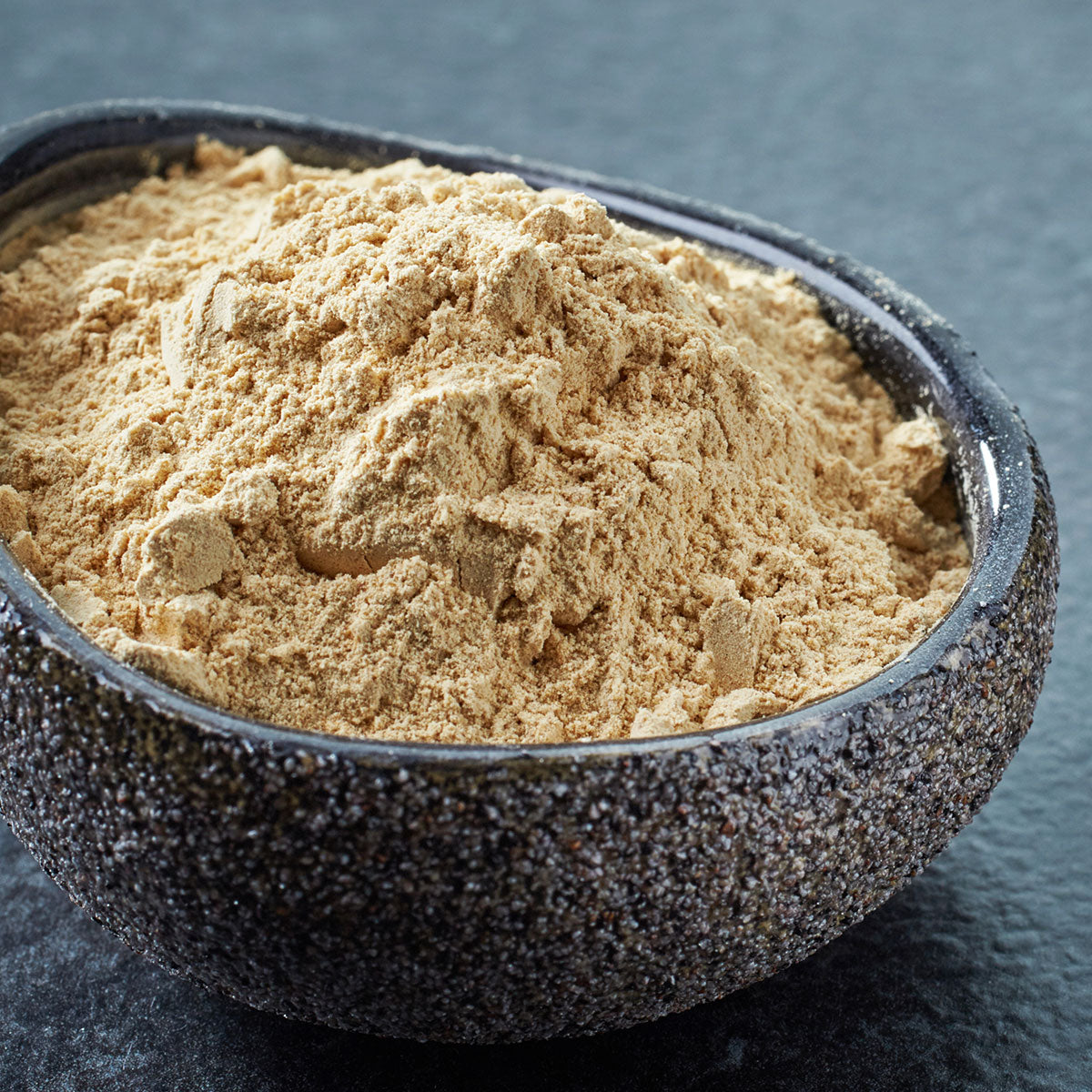
Adding Protein Burst to your breakfast is one of the easiest ways to hit that protein threshold - 22g of complete plant protein per serving. Stir it into oats, blend it into a smoothie, or mix it into pancake batter.

2. Fibre: Your Body's Natural Appetite Regulator
You've probably heard about GLP-1 in the context of appetite-suppressing jabs. But your body actually produces GLP-1 naturally - and one of the most effective triggers is fibre.
When fibre reaches your large intestine, gut bacteria ferment it into short-chain fatty acids. These directly stimulate the release of GLP-1 and PYY - both satiety hormones that signal your brain to stop eating. Research published in Cell Host & Microbe (2016) found that increased dietary fibre intake significantly boosted GLP-1 secretion.
Every plate needs fibre. Ground flaxseeds, chia seeds, vegetables, fruits, beans, lentils - these aren't side dishes, they're the foundation of a plate that keeps you satisfied.
3. Nutrient Density: Filling the Gaps That Cause Cravings
Here's something that often gets overlooked: you can be eating enough food in terms of volume and still have your body demanding more, simply because it's not getting the micronutrients it needs.
Deficiencies in B vitamins and iron are incredibly common, and both are essential for energy production and appetite regulation in the brain. When these run low, many people experience persistent tiredness that gets misread as hunger, and cravings that no amount of snacking satisfies. Your body isn't actually hungry for more food - it's hungry for better nutrition.
This is where Spirulina comes in. It's one of the most nutrient-dense foods on the planet - packed with B vitamins, iron and protein in a highly absorbable form. Many people find it curbs cravings or stops them from building in the first place. Try a serving in a glass of lemon or lime water about an hour before a meal, so you're not making food choices from a place of deprivation.


4. The Crunch Factor
This one might surprise you. Research on oral processing shows that texture directly affects how satisfied you feel after eating.
A study in PLOS ONE (Bolhuis et al., 2014) found that foods requiring more chewing naturally slow eating speed, giving your brain more time to register fullness. Another in the Journal of the American Dietetic Association (Zijlstra et al., 2009) showed that foods needing more oral processing reduced overall intake without people feeling less satisfied.
Think cherry tomatoes - it's very easy to keep popping them, that crunch, that burst of flavour. Same satisfying quality as crisps, just healthier. Raw vegetables, toasted pistachios, pumpkin seeds on a salad, a crisp apple, granola with yoghurt - without something crunchy, you're basically eating a bowl of mush.
5. Sleep: The Hidden Hunger Trigger
Poor sleep doesn't just make you tired - it directly disrupts your hunger hormones. A landmark study by Spiegel et al. (2004) in the Annals of Internal Medicine found that restricting sleep to four hours for just two nights raised ghrelin (the hunger hormone) by 28% while lowering leptin (the satiety hormone) by 18%.
If you've ever noticed that after a bad night you're reaching for sugary, carb-heavy food all day, this is why. Don't underestimate the role of good sleep in keeping food noise quiet.
6. Your Hormonal Cycle and Food Noise
For women: if food noise gets significantly louder in the week or two before your period, that's not in your head. During the luteal phase, progesterone rises and your body's energy demands increase, which genuinely intensifies cravings.
Rather than fighting it, the anti-food-noise plate becomes especially important at this time. Allow yourself more complex carbohydrates - sweet potato, oats, citrus fruits - because these directly support hormone production. This isn't giving in. It's responding intelligently to what your body needs.

7. Blood Sugar: The Craving Loop
When blood sugar spikes and crashes, your body sends an urgent signal: get me energy, fast. That's when food noise becomes almost impossible to ignore.
True Ceylon Cinnamon slows carbohydrate absorption and helps stabilise blood sugar, keeping those spikes and dips more even. It also adds a naturally sweet flavour without sugar - sprinkle it on porridge, oatmeal, granola or yoghurt for that comforting sweetness while maintaining steady energy levels. Cinnamon capsules are handy between meals too, especially on busy days when meals are irregular.

A Note on Emotional Food Noise
Food noise can also come from emotional places - comfort eating, stress, boredom. The tips here will likely help even when triggers are emotional, because a well-nourished body handles stress differently. But if you feel there's something deeper going on, that deserves attention too. Be kind to yourself.
Building Your Anti-Food-Noise Plate
Rather than a rigid meal plan, here are the boxes to tick:
- Protein - some on every plate. Beans, lentils, tofu, tempeh, or Protein Burst in your breakfast or afternoon smoothie
- Fibre - ground seeds, chia, vegetables, fruits, legumes
- Something crunchy - raw veg, cherry tomatoes, toasted nuts, pumpkin seeds, apple slices, granola
- Don't skip carbs - vegetables, fruit, oats, quinoa, sweet potato. They make your body feel safe
- Healthy fats - olive oil, avocado, tahini, nut butters. Without them, something always feels missing
- Volume - eat enough. Tiny portions leave you unsatisfied
- Strong flavours - tamari, sea salt, sundried tomatoes, fresh herbs, a squeeze of lemon
- Eat something hot - warm food has a satisfying, comforting element that cold meals rarely match
- Eat mindfully - if you're scrolling while eating, you may miss the fact you've eaten at all
If you resist the idea of eating 'more', think of it as eating smarter at mealtimes so you eat less between them. Ask yourself after a meal: Am I already thinking about what to eat next? Do I feel shaky or steady? Can I forget about food for a while? If the answer to that last one is no, your plate needs work, not your willpower.
Your Daily Protocol
Morning: Protein Burst in your breakfast (oats, smoothie, pancakes) + Cinnamon sprinkled on top. Aim for at least 25-30g protein.
Before lunch: A glass of water with Spirulina and lemon or lime juice, about an hour before your meal - so you're choosing food calmly, not desperately.
Afternoon: If lunch was light on protein, have a Protein Burst shake. Take Cinnamon capsules between meals if needed to keep blood sugar steady.
At every meal: Build your plate with protein, fibre, crunch, carbs, fats, volume and flavour. Tick the boxes, eat enough, and let your body do the rest.
"Food noise doesn't start with snacks - it starts with meals that didn't satisfy you."
Start eating a proper plate that ticks these boxes. When your body genuinely gets what it needs, the noise goes quiet on its own.